


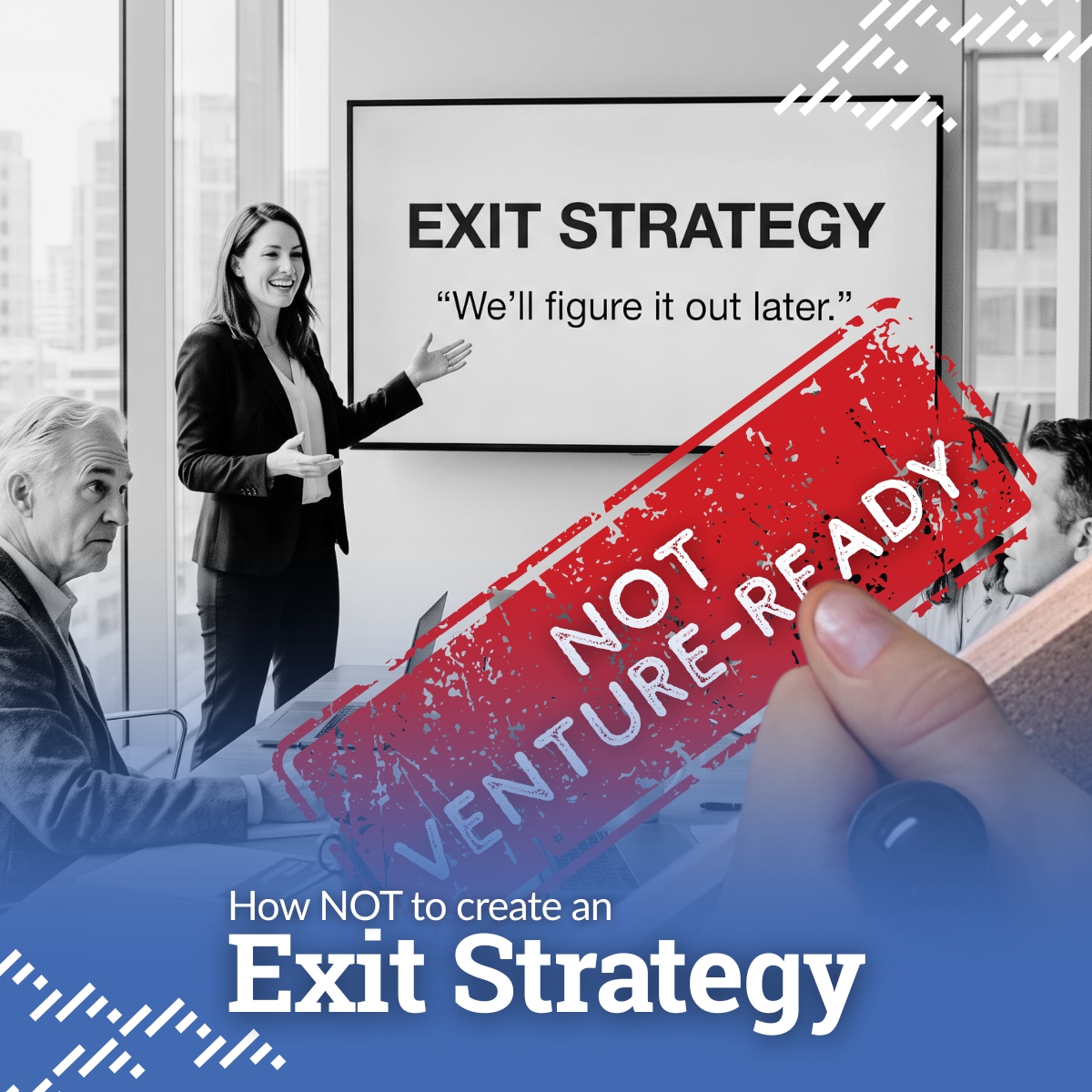
Founders—and even many investors—are often like deer in the headlights when it comes to describing their exit strategy. They don’t know where to start, and it’s one of the easiest things to procrastinate on because it seems like the exit is five years away—but it’s not!
Failing to create an exit strategy is one of the biggest mistakes a founder can make. A company without an exit strategy will almost certainly have a less successful exit than one that plans from the beginning. Without a plan, the exit may never come around at all.
Assume “someone in your industry” will acquire you. Sometimes that is actually the right answer. Other times, you’re leaving money on the table by overlooking an acquirer in an adjacent industry that might pay more for your expertise, technology, customers, or connections. A company in your own industry may simply be buying more of what it already has.
Don’t research comparable transactions to see which companies are making acquisitions in your industry or what revenue multiples they’re paying. Not knowing the comps is a great way to fail at your exit. That research could give you important insight into the optimal time to sell, rather than riding the company over the top and watching its value decline.
Don’t talk to potential acquirers to understand how they view gaps in the market. Operating in “stealth mode” is a fool’s errand after a certain point. By learning about gaps in incumbents’ offerings, you may discover strategic partnership opportunities that eventually lead to an exit.
Don’t build relationships with investment bankers. If you’ve never gone through an exit before, you may be tossed to the wolves when the time comes. Building relationships with investment bankers early helps them understand your business and identify the best potential matches.
Don’t share your current exit strategy with your board at quarterly meetings. Your board is your partner, and you need alignment across the entire team. Sharing your Exit Strategy Canvas at board meetings keeps the topic front and center and allows the strategy to evolve as the company and market change.
Don’t partner with potential acquirers. Many startups think acquisitions happen overnight. They don’t. A strategic partnership is one of the best ways to develop a deep relationship over time—one that can ultimately lead to a successful acquisition.

Don’t price your financing rounds so investors can achieve their target returns in a successful exit. Companies without exit plans often have no idea what kind of investor returns their likely acquisition value can support. This can lead to valuation and dilution errors that cost startups millions of dollars.
Don’t think that “just growing big” is enough. It does help, of course. But growing big is one thing; building something that acquirers actually need is another. I’ve seen many high-return exits involving companies that never became particularly large. Sometimes, getting big simply means adding another five years to the exit timeline without creating any additional exit value.

Don’t think of your acquirer as a customer who is buying your company—not just your product. Your acquirer is your “Second Customer.” Your “First Customer” is whoever buys your product. That’s nice—and necessary. But the Second Customer is the one who creates the payday by acquiring the company.

Complete a Business Model Canvas alongside your Exit Strategy Canvas to sharpen your value proposition for potential acquirers. Too many founders think of their startup primarily as a job and miss the fact that a well-planned exit can pay them decades’ worth of salary if they do it right.

.jpg)


.jpg)

