



Welcome back—I hope you all had a great holiday season.
I am optimistic about what 2026 will bring for the angel and venture capital investing community. We are seeing a renewed wave of high-quality deal flow, including AI-driven solutions, continued innovation in life sciences and healthcare, promising cleantech opportunities, and much more.
Exit duration appears to have peaked in 2023–2024 and is now reversing.
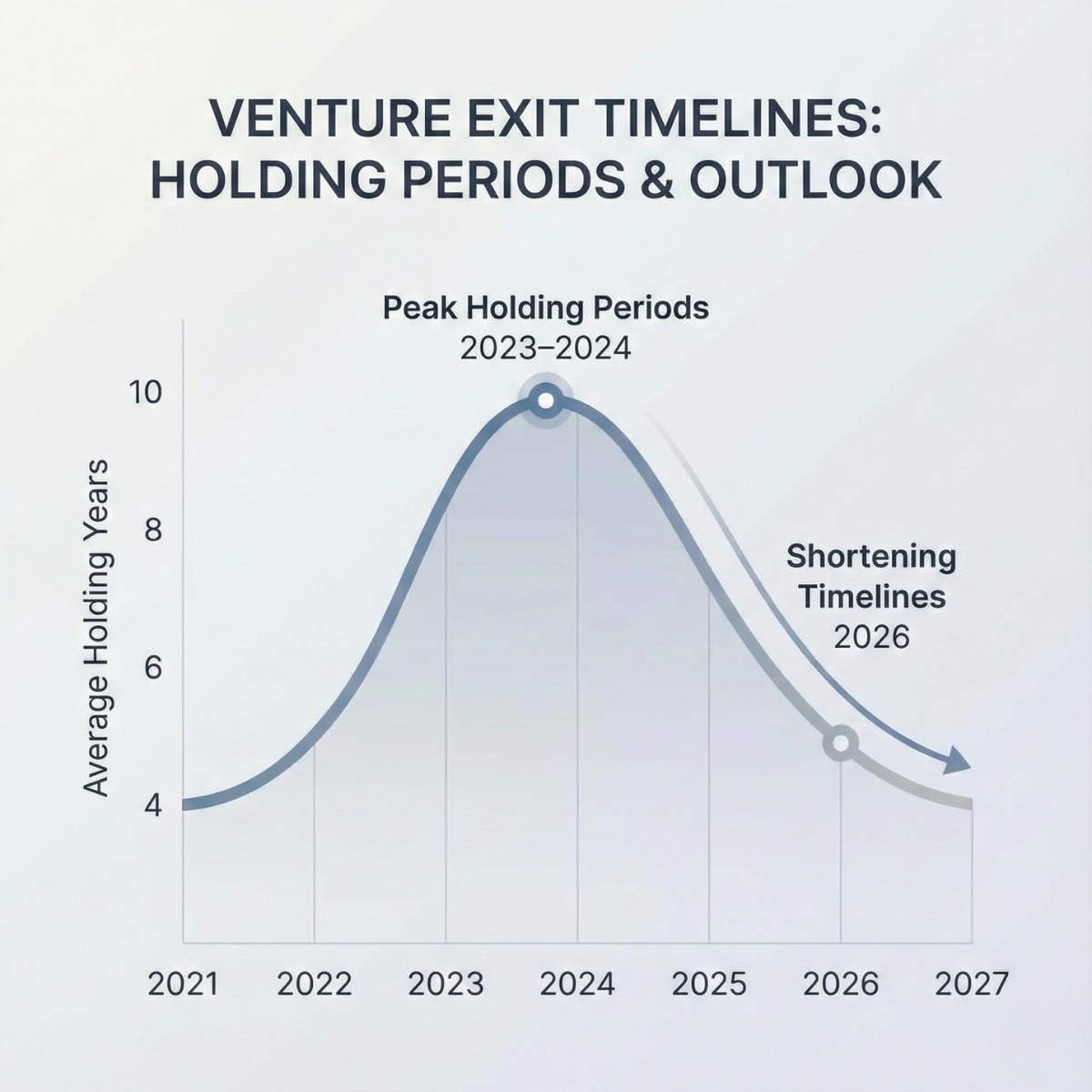
While the past few years have presented strong investment opportunities, liquidity has remained a persistent challenge. Exit timelines lengthened meaningfully across the venture ecosystem. That said, there is encouraging news. Recent PitchBook data indicates that average holding periods for PE-backed exits have begun to decline, a trend that bodes well for RVC investors and the Rockies Venture Fund portfolio. After peaking in 2023-2024, we’re seeing a downward trend in holding times. Actions taken by the Fed to reduce interest rates have helped
One of the more surprising observations during the peak of extended holding periods was how few startup founders appeared to be aware of what was happening in the broader venture capital market. Many spent little time thinking proactively about exit strategy, liquidity timing, or how macroeconomic forces influence acquisition and exit activity.
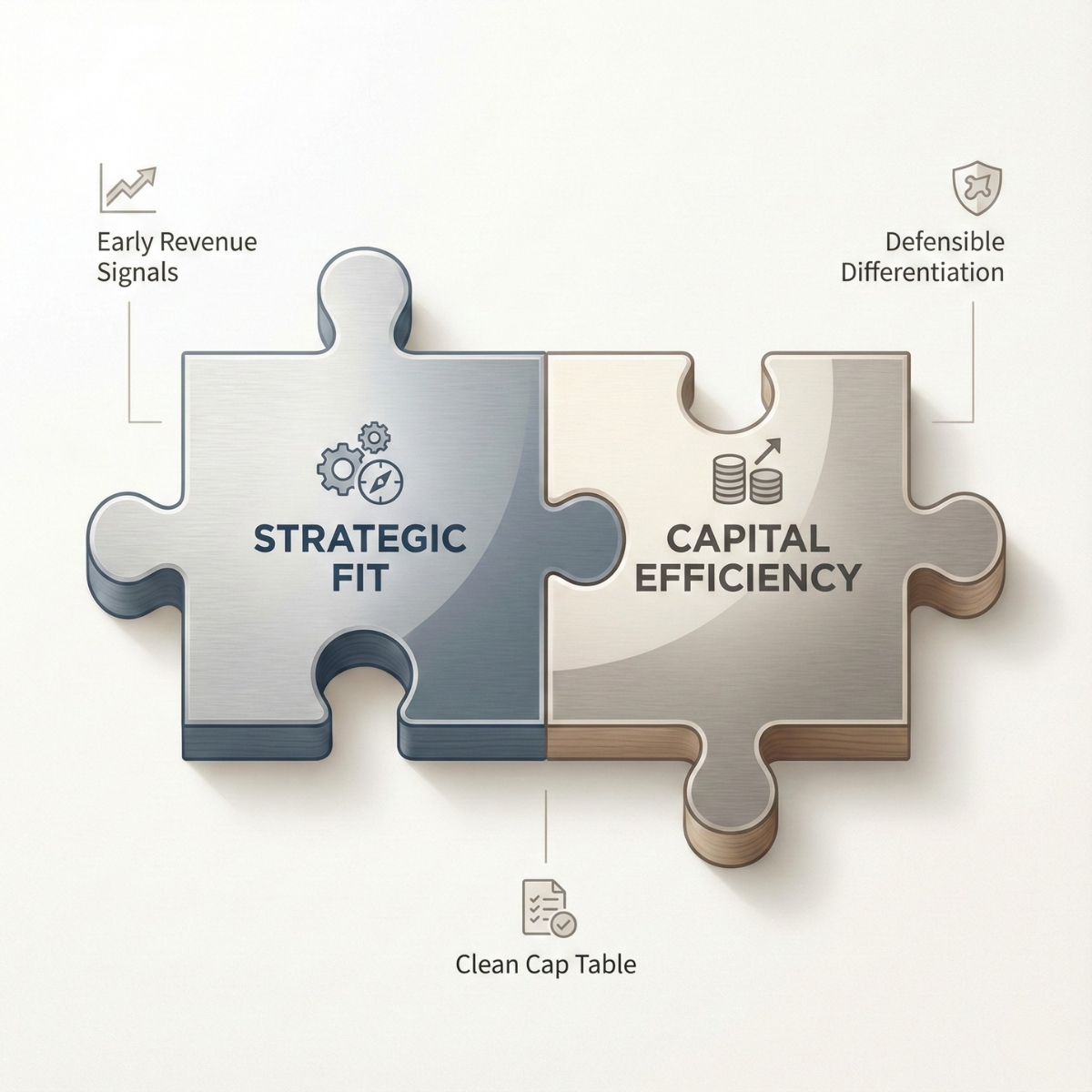
In 2026, founders and investors should utilize the RVC Exit Strategy Canvas to hone their strategy. The trends in acquisitions show that buyers of early-stage and seed-stage companies are prioritizing capital efficiency, clear strategic fit, and early but credible revenue signals over growth at any cost. Acquirers are looking for businesses with clean cap tables, defensible differentiation beyond generic AI claims, and founders who are realistic about valuation and open to structured outcomes. Companies that can clearly articulate why specific buyers would care, demonstrate disciplined use of capital, and engage potential acquirers early through partnerships or pilots are best positioned to benefit from shortening exit timelines and renewed M&A activity.
In this weekly newsletter, I have tried to consistently provide macro-level context—interest rates, capital availability, exit markets, and sector-specific trends—to reinforce an important point: angel and venture investing is not only about individual companies, technologies, or innovations. It is also about understanding the broader environment that shapes outcomes across the entire asset class. My hope is that both founders and investors bring more of this perspective into their decision-making in 2026.
Last year, after months of negotiations, a PE acquirer backed out of a deal with an RVC portfolio company citing increasing broad economic uncertainty as the reason. It now seems that acquirers are adjusting to the new normal and after several years of extended holding periods driven by rising interest rates, valuation dislocations, and cautious acquirers, exit timelines are beginning to compress as multiple macro forces realign. Stabilizing interest rates and improving financing conditions have brought buyers back to the table, while aging venture and private equity funds are under increasing pressure to return capital, even at pragmatic outcomes rather than peak valuations. At the same time, valuation expectations have reset, strategic acquirers—particularly in AI, cybersecurity, healthcare, and industrial technology—are using M&A to accelerate growth and secure talent, and secondary markets have reduced the need to delay liquidity events. For early-stage and seed-stage companies, this environment favors capital-efficient business models, clear strategic positioning, and earlier engagement with potential acquirers, increasing the likelihood of faster exits compared to the elongated timelines seen over the past several years.
As exit timelines stretched, we adapted. We focused on identifying companies with clear and realistic paths to liquidity, studied exit markets closely, and analyzed who was acquiring what—and why. That disciplined approach has served us well.
Looking ahead, we are encouraged by improving exit dynamics and are optimistic that 2026 will bring increased liquidity across our portfolio.
Holding periods for PE-backed exits have begun to shorten after peaking in recent years, signaling improving liquidity conditions for private market investors.
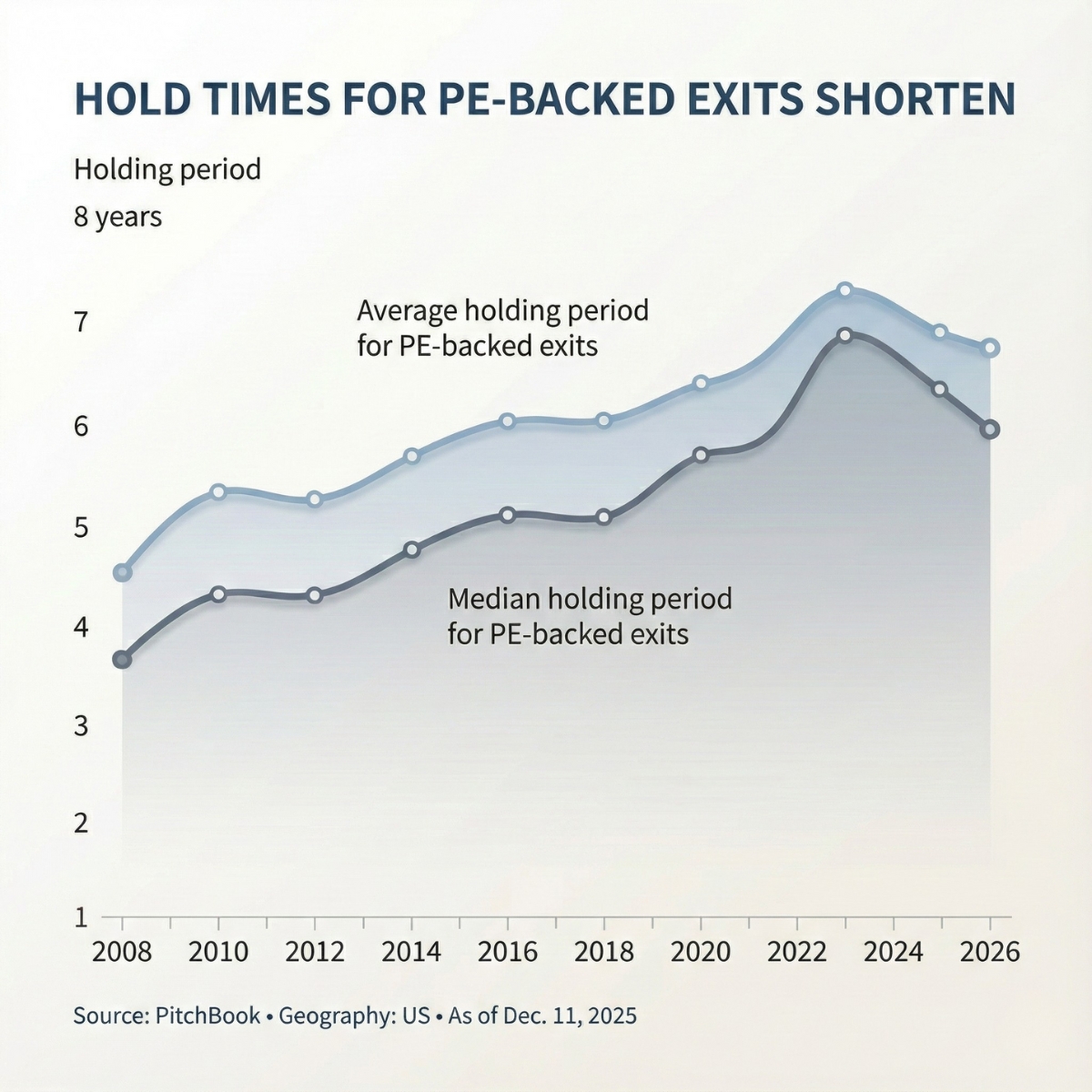
Source: PitchBook, U.S. data as of December 11, 2025.

.jpg)


.jpg)

